 Social Robotics
What is social robotics?
A social robot is a robot whose main purpose is to interact with people in a socially meaningful way. Social robotics is the field that designs, builds and studies them.
A working definition
There is no single official definition, but most researchers would accept something close to this: a social robot is an autonomous or semi-autonomous physical machine that interacts and communicates with people by following the behavioural norms people expect of each other.
Three parts of that sentence matter:
- Physical. A social robot has a body that shares space with you. A chatbot on a screen can be social, but it is not a robot. The body changes the interaction: people respond more strongly to something that is physically present, looks at them and moves.
- Interacts with people. The interaction is the point, not a side effect. A warehouse robot that avoids workers is safe around people. A social robot is built to engage them.
- Follows social norms. It takes turns in conversation, looks at the person it is talking to, keeps a comfortable distance, greets, apologises, and signals what it is about to do. People already know these rules, so a robot that follows them needs no instruction manual.
Cynthia Breazeal, whose robot Kismet launched the field in the late 1990s, framed the goal as a robot that people can interact with much as they would with another person, using social skills they already have rather than learning to operate a machine.
Social robots versus other robots
It helps to compare. An industrial arm works behind a safety fence and has no idea people exist. A collaborative robot (a "cobot") works next to people and slows down when they come near, but it does not communicate with them. A robot vacuum lives in your home, but you do not talk to it. A social robot is defined by communication: it notices you, addresses you, and responds to how you respond.
The line is blurry. Delivery robots in hospitals increasingly say "excuse me" and indicate where they are going. Humanoid robots built for factories are being given faces and voices. As robots move into human spaces, more of them need at least some social skills, and social robotics research is becoming relevant to almost every robot that meets the public.
What makes a robot social?
Researchers usually break social ability down into a set of skills. A robot does not need all of them, but the more it has, the more natural it feels.
Perceiving people
Detecting that someone is there, recognising who they are, working out where they are looking, who is speaking and who is being spoken to. In a group, keeping track of several people at once.
Reading emotion and intent
Picking up cues from facial expressions, tone of voice and body posture, and inferring what a person wants. This is hard: the same frown can mean confusion, concentration or annoyance.
Communicating naturally
Speech is only part of it. Humans communicate heavily through gaze, head movements, facial expression, gesture and timing. A robot that looks away while "thinking" or nods while listening feels far more natural than one that stares.
Managing conversation
Knowing when it is your turn to speak, how to handle interruptions, how to recover when you misunderstood, and how to bring a conversation to an end.
Following social norms
Politeness, personal space, not interrupting, adapting to culture and context. A robot in a hospital ward should behave differently from one in a shopping centre.
Remembering and adapting
Recognising a returning person, remembering what you talked about, and adjusting to preferences over weeks and months. This is what turns a novelty into a relationship.
Being legible
Making its intentions and limits clear, so people can predict what it will do and understand what it cannot do. Good social robots signal before they move and make it obvious when they have not understood.
Kinds of social robots
Social robots come in very different shapes, and the shape is a design decision with big consequences.
Zoomorphic
Animal-like robots such as the seal Paro or the dog aibo. People have fewer expectations of animals, so the robot disappoints less.
Cartoon-like
Stylised characters such as Cozmo, Jibo or Moxie. Expressive without pretending to be human, which avoids the uncanny valley.
Humanoid
Robots with a recognisably human layout but a machine look, such as NAO and Pepper. Familiar body language, clearly a robot.
Faces and heads
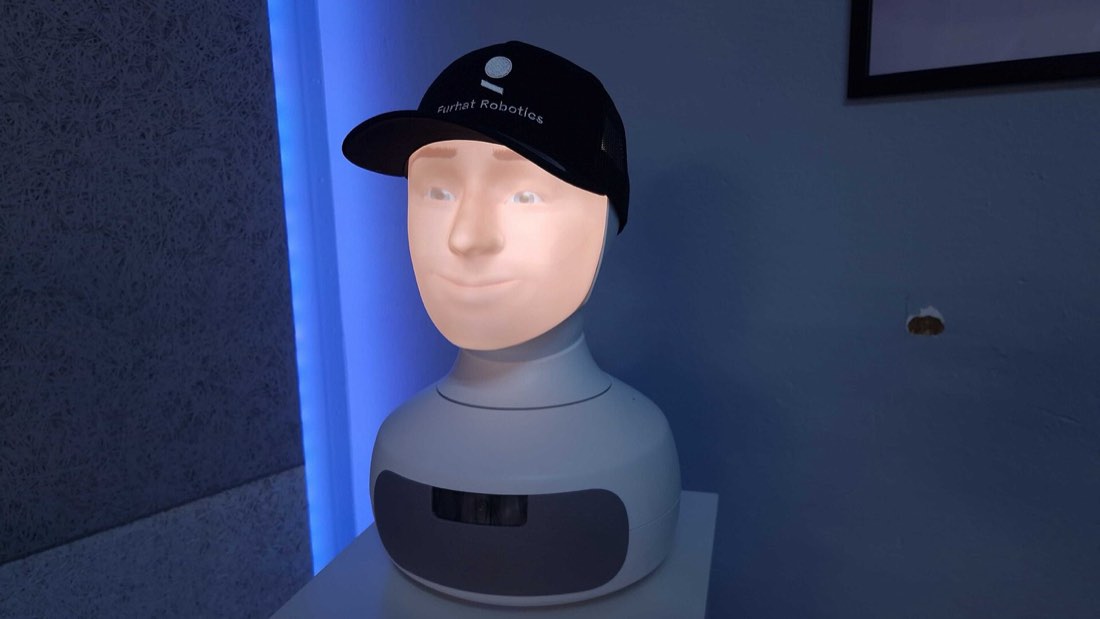
Robots that focus on the face, where most social signals live. Furhat projects an animated face onto a mask; Kismet was a mechanical head.
Androids
Robots built to look as human as possible, such as Hiroshi Ishiguro's Geminoid or Ameca. Powerful for research, but they risk the uncanny valley.
Abstract
Robots with almost no human or animal features, like ElliQ's tabletop lamp shape. They rely on light, movement and voice to feel alive.
Why do people respond to robots at all?
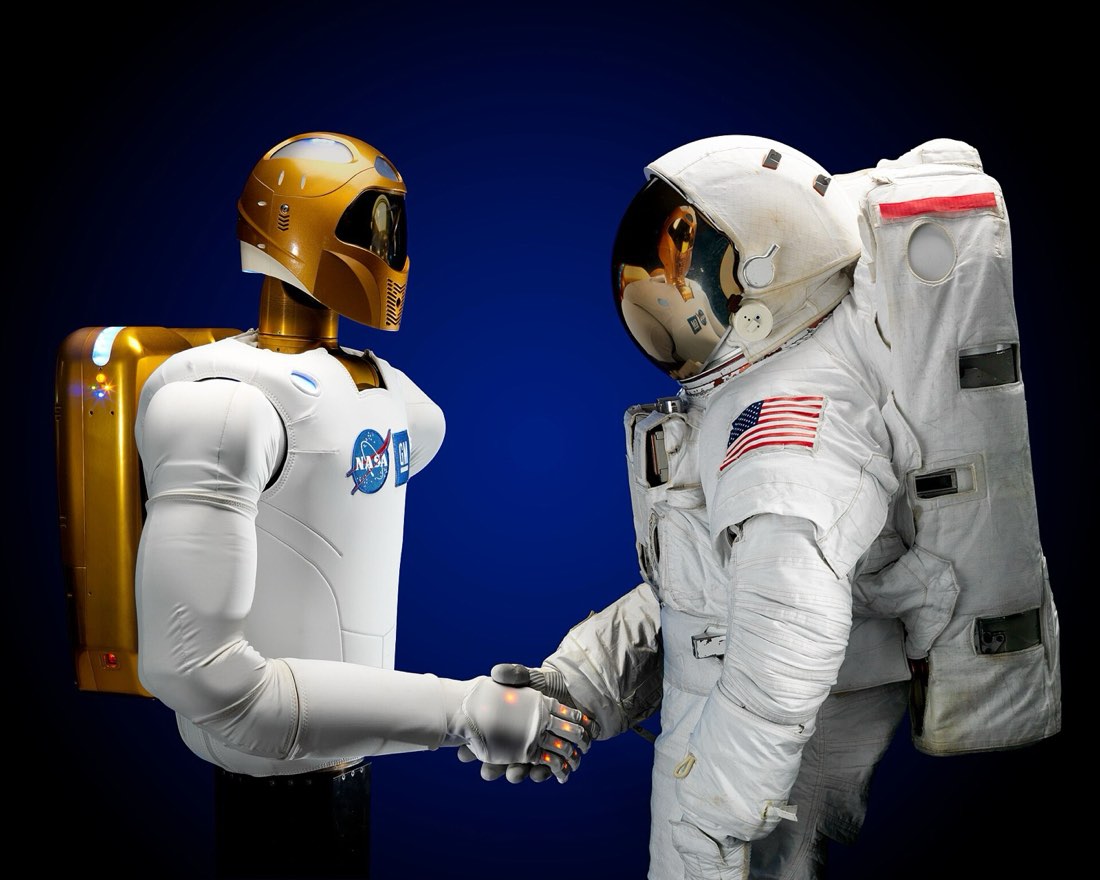
The most surprising finding in the field is how little it takes. People name their robot vacuums, feel sorry for robots that are kicked, and say goodbye to machines they know are programmed. Several ideas help explain this.
We are built to see minds
Humans evolved to detect agents: things that move on their own and might have goals. Anything that moves purposefully, looks at us or responds to us triggers that machinery automatically, whether or not we believe it has a mind. This is called anthropomorphism.
The media equation
In the 1990s Byron Reeves and Clifford Nass ran experiments showing that people treat computers socially: they are polite to them, flattered by them and apply gender stereotypes to computer voices, even while saying they would never do such a thing. If a desktop computer triggers this, a robot that looks at you triggers it much more.
Presence matters
Studies comparing a physical robot with the same robot on a screen generally find that the physical one is more engaging, more persuasive and better remembered. Being in the same room changes the relationship.
These effects are what make social robots useful, because people engage with them easily. They are also what makes them ethically sensitive, because people may trust or attach to a machine more than it deserves. See Ethics and society.
Who works on social robotics?
Social robotics is unusually interdisciplinary. A typical project involves engineers for the body and motors, computer scientists for perception, speech and dialogue, psychologists to design experiments and measure how people respond, designers and animators to give the robot a character, and often clinicians, teachers or carers who know the setting where the robot will be used. The main research field is called human-robot interaction, or HRI.