 Social Robotics
A history of artificial intelligence
For most of its history, AI swung between bold promises and long winters. Then cheap computing, huge datasets and neural networks changed everything in little more than a decade. This is the story, era by era, with the milestones of robotics and social robotics marked along the way.
Robots marks milestones in robotics and social robotics. Magic marks where AI and robotics history meets the history of stage magic.
Before computers
Long before electronics, people built machines that seemed alive and wondered whether thought itself could be mechanised. Many of the finest were built by clockmakers and magicians, as entertainment. The full story is in our automata dossier.
- 1st c. CEHero of Alexandria describes temple doors that open by themselves, singing mechanical birds and an automatic theatre, powered by water, air and falling weights. Religious theatre built on hidden mechanisms. Magic
- 9th c.The Banu Musa brothers in Baghdad describe a flute player driven by a pinned cylinder that can be changed to play different tunes, often called the first programmable machine. Robots
- c. 1125William of Malmesbury records the legend of a brazen head that answered questions with "yes" or "no". Talking oracle heads become a recurring medieval legend.
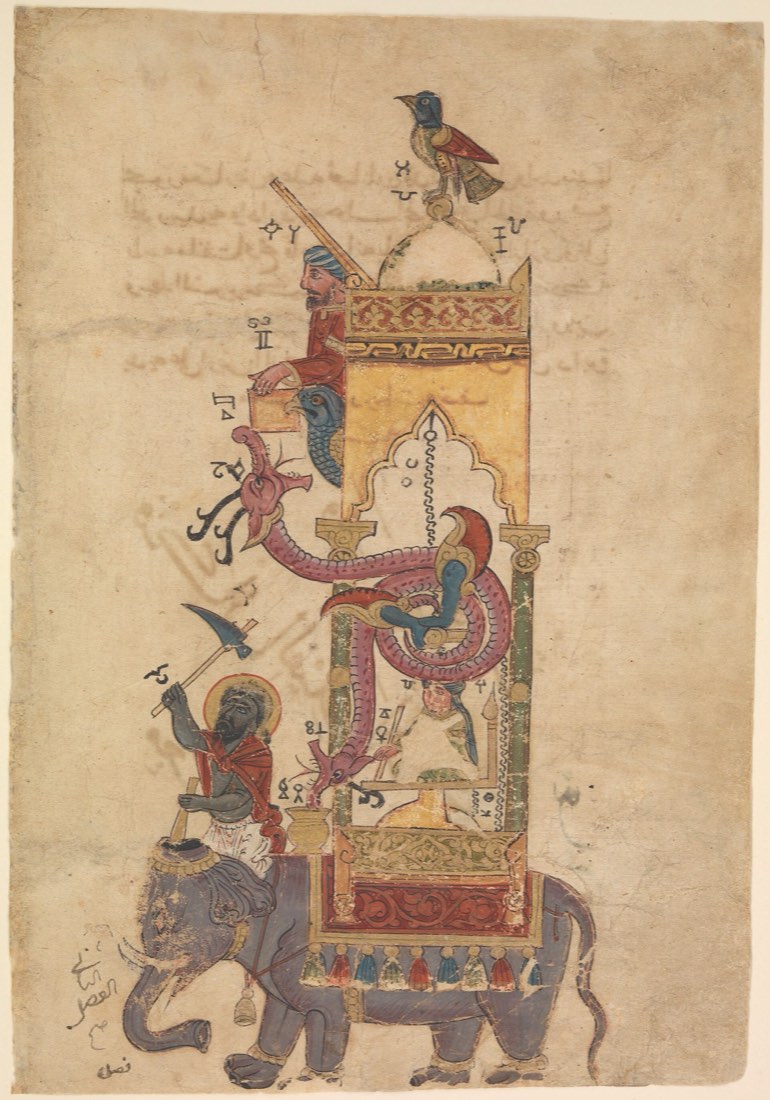
- c. 1206The engineer Ismail al-Jazari describes programmable automata in his Book of Knowledge of Ingenious Mechanical Devices, including a band of mechanical musicians whose rhythm could be changed by moving pegs. Robots
- c. 1495Leonardo da Vinci sketches a mechanical knight that could sit up, move its arms and turn its head, worked by pulleys and cables. Robots
- 1739Jacques de Vaucanson exhibits his "Digesting Duck", an automaton that appeared to eat and digest grain. The digestion was faked, a secret later uncovered by the magician Robert-Houdin. Lifelike automata become a European sensation. Robots
- 1768-1774Pierre Jaquet-Droz and his workshop build The Writer, The Draughtsman and The Musician, child-like androids that still work today in Neuchâtel. The Writer's text is set by interchangeable characters: a programmable output. Robots
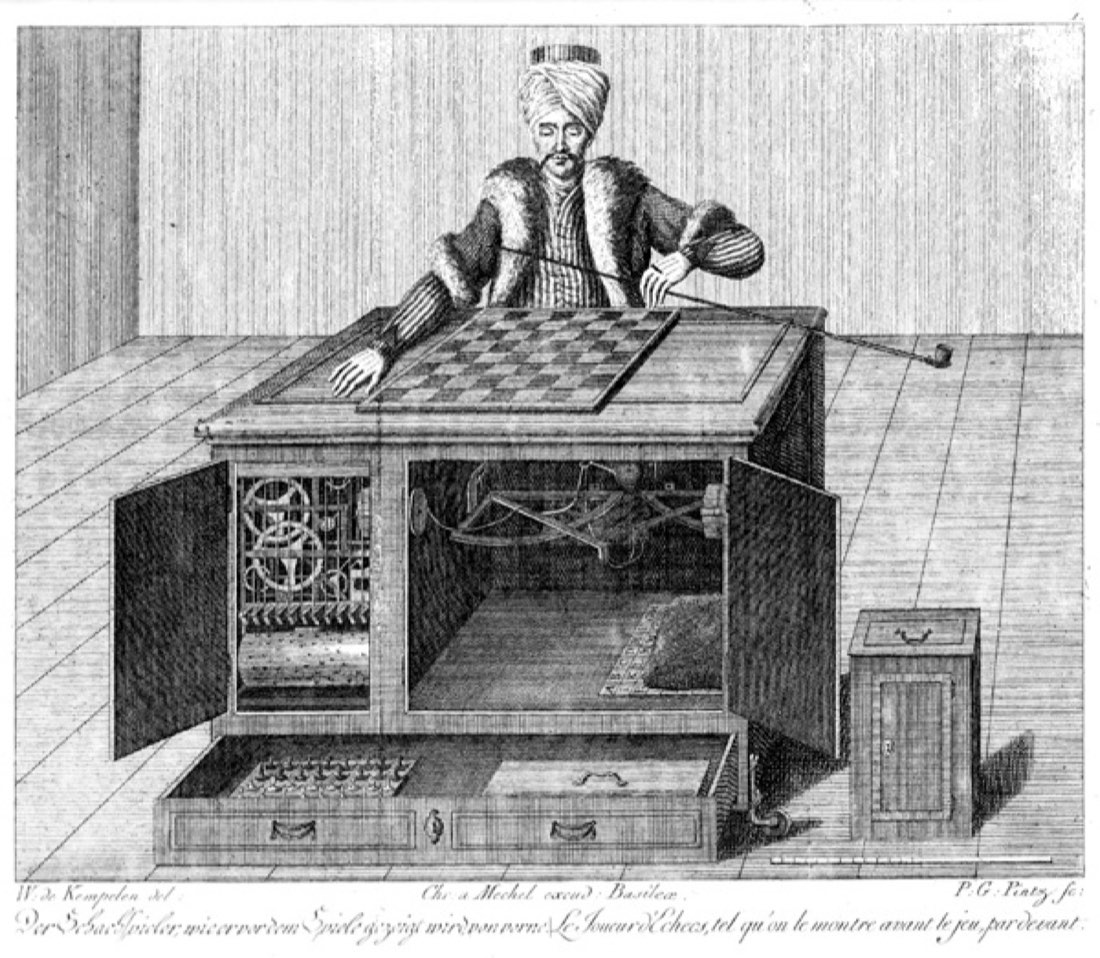
- 1770Wolfgang von Kempelen unveils the Mechanical Turk, a chess-playing "machine" that toured Europe and America for over 80 years. A human chess master was hidden inside, concealed by classic magicians' misdirection: an early lesson in how eager people are to believe in thinking machines. Magic
- 1796Hosokawa Hanzo Yorinao publishes the Karakuri Zui in Japan, a manual for mechanical dolls including the tea-serving doll that carries a cup to a guest and returns. Robots
- c. 1800Henri Maillardet builds a boy automaton that draws four pictures and writes three poems, with the largest mechanical "memory" of any automaton of its kind. Robots
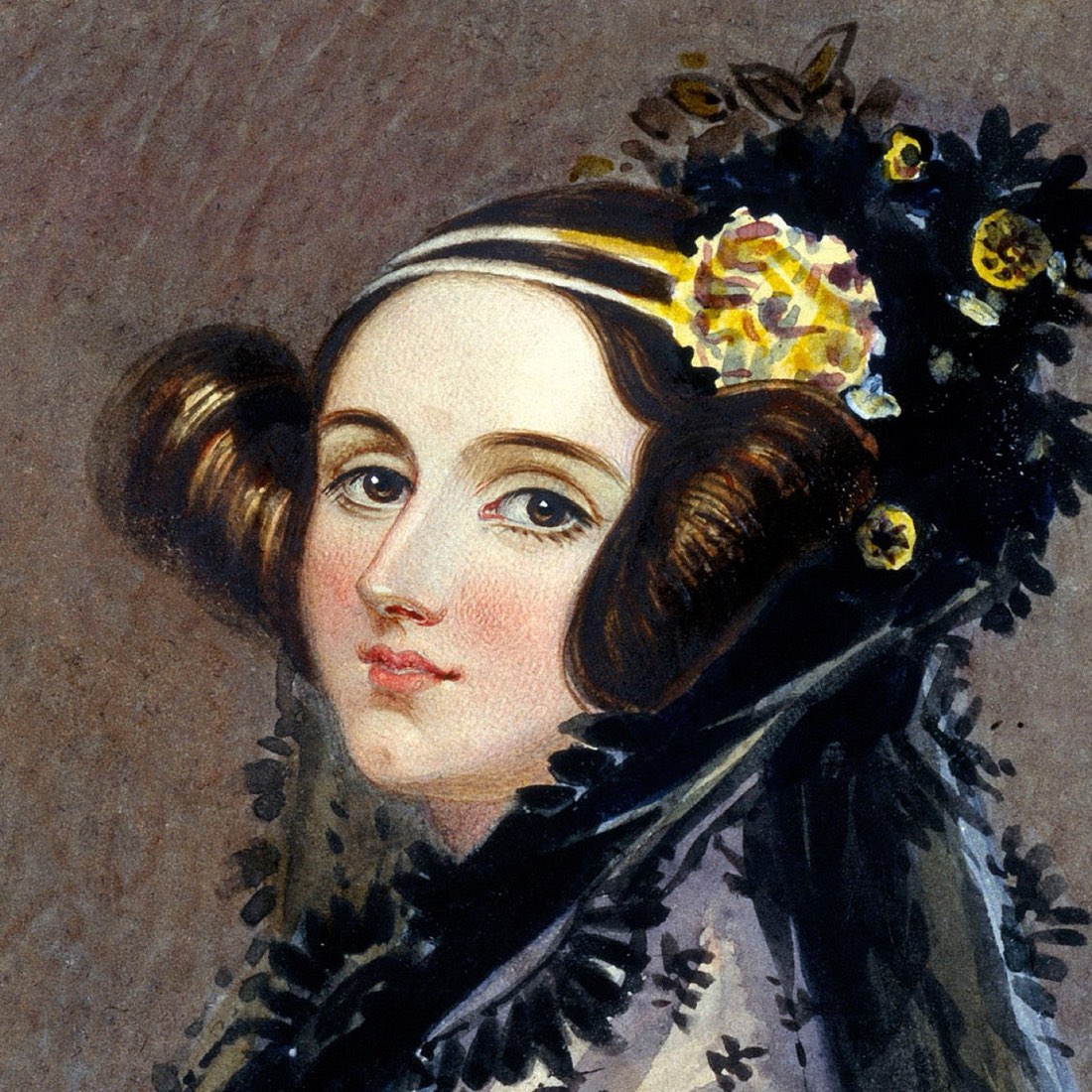
- 1843Ada Lovelace publishes her notes on Charles Babbage's Analytical Engine. She sees that it could manipulate symbols, not just numbers, and might even compose music, but argues it can only do what it is told.
- 1845The clockmaker turned magician Jean-Eugène Robert-Houdin opens his theatre in Paris. His shows combine sleight of hand with automata and hidden electromagnets, and he becomes known as the father of modern magic. Read more. Magic
- 1854George Boole publishes The Laws of Thought, reducing logic to algebra. A century later, Boolean logic becomes the language of digital circuits.
- 1875In London, the magician John Nevil Maskelyne and engineer John Algernon Clarke unveil Psycho, an automaton that plays whist on stage, its secret kept for decades. Magic
- 1896Georges Méliès, magician and owner of the Théâtre Robert-Houdin, begins making films there, turning stage illusion into cinematic special effects. Magic
- 1920Karel Čapek's play R.U.R. introduces the word "robot", from the Czech robota, meaning forced labour. Robots
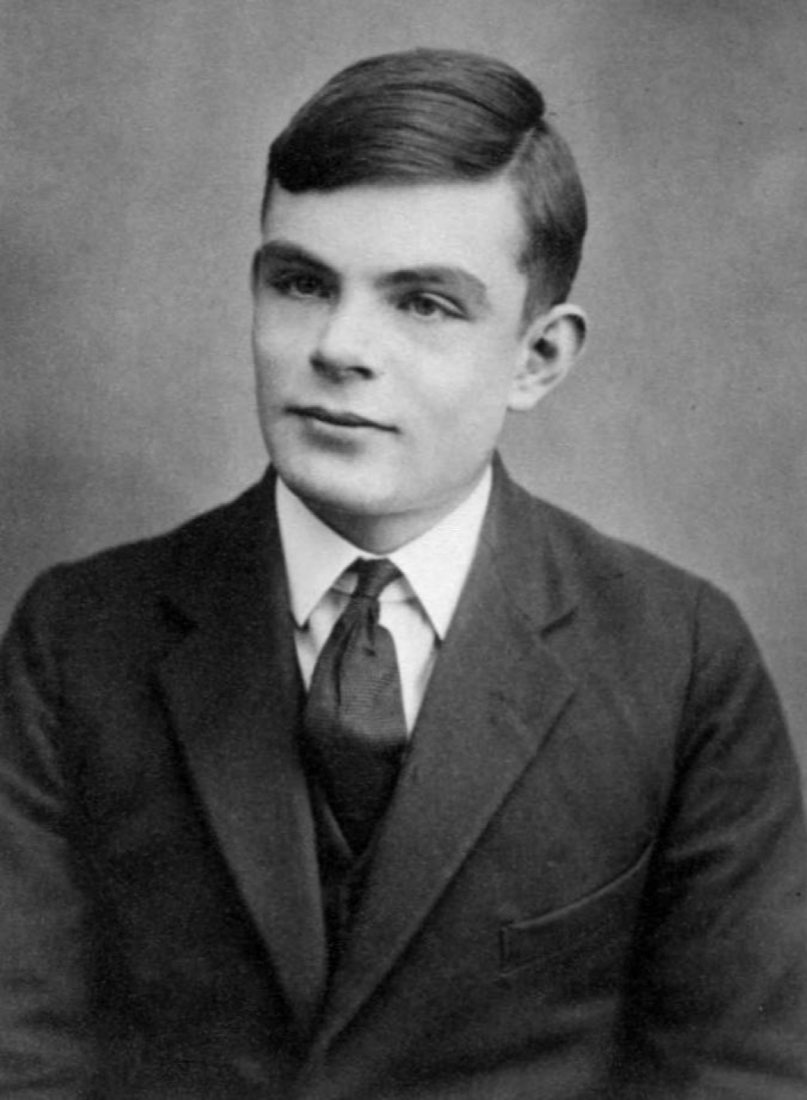
- 1936Alan Turing describes the universal machine: a single device that can carry out any computation that can be written as a procedure. It is the theoretical blueprint for every computer since.
- 1942Isaac Asimov sets out his Three Laws of Robotics in the short story "Runaround". They become the starting point for generations of debate about machine ethics. Robots
The birth of AI, 1940-1956
The first electronic computers arrive, and a small group of mathematicians, neuroscientists and engineers ask whether they could think.
- 1943Warren McCulloch and Walter Pitts publish a mathematical model of the neuron, showing that networks of simple on-off units could in principle compute anything. It is the seed of every neural network.
- 1948Norbert Wiener publishes Cybernetics, the science of control and feedback in animals and machines.
- 1949W. Grey Walter's robot "tortoises", Elmer and Elsie, wander towards light and back to their charging hutch, showing surprisingly lifelike behaviour from just two artificial neurons. Robots
- 1949Donald Hebb proposes that connections between neurons strengthen when they fire together. "Hebbian learning" inspires later learning algorithms.
- 1950Turing publishes "Computing Machinery and Intelligence" and proposes the imitation game, now called the Turing test: if a machine's conversation cannot be told apart from a person's, should we say it thinks?
- 1951Marvin Minsky and Dean Edmonds build SNARC, a learning machine made of 40 artificial neurons using vacuum tubes. Christopher Strachey writes a draughts program for the Ferranti Mark 1.
- 1955John McCarthy, Marvin Minsky, Nathaniel Rochester and Claude Shannon write the proposal for a summer research project and coin the term "artificial intelligence".
- 1956Allen Newell, Herbert Simon and Cliff Shaw demonstrate the Logic Theorist, which proves theorems from Principia Mathematica. It is often called the first AI program.
- 1956The Dartmouth workshop brings the founders together for a summer. It is generally taken as the founding moment of AI as a field.
The golden years, 1956-1973
Programs solve algebra problems, prove theorems and hold simple conversations. Researchers predict human-level AI within a generation, and governments fund them generously.
- 1958Frank Rosenblatt introduces the perceptron, a neural network that learns from examples. The press reports it as the embryo of a computer that will walk, talk and be conscious.
- 1958McCarthy invents the programming language LISP, which becomes the main language of AI research for decades.
- 1959Arthur Samuel coins the term "machine learning" for his checkers program, which improved by playing against itself until it beat its creator.
- 1959Newell and Simon's General Problem Solver tries to capture human problem-solving in a single program.
- 1961Unimate, the first industrial robot arm, starts work on a General Motors assembly line. Robots
- 1964Daniel Bobrow's STUDENT solves algebra word problems written in English.
- 1966Joseph Weizenbaum publishes ELIZA, a chatbot that imitated a psychotherapist with simple pattern matching. Users confided in it emotionally, which alarmed Weizenbaum. The "ELIZA effect" is still central to social robotics.
- 1966-1972Shakey, built at SRI, becomes the first mobile robot to reason about its own actions, combining vision, planning and movement. The A* search algorithm comes out of the project. Robots
- 1968Terry Winograd begins SHRDLU, a program that understands commands about a virtual world of blocks. Stanley Kubrick's 2001: A Space Odyssey gives the public HAL 9000.
- 1969Minsky and Seymour Papert publish Perceptrons, proving the limits of single-layer networks. Funding for neural network research largely dries up for over a decade.
- 1970Masahiro Mori proposes the "uncanny valley": robots that look almost human can feel eerie rather than appealing. Robots
- 1972Alain Colmerauer and colleagues create Prolog, a language for logic programming.
- 1973Waseda University in Tokyo completes WABOT-1, the first full-scale humanoid robot. It could walk, grip objects and hold a basic conversation in Japanese. Robots
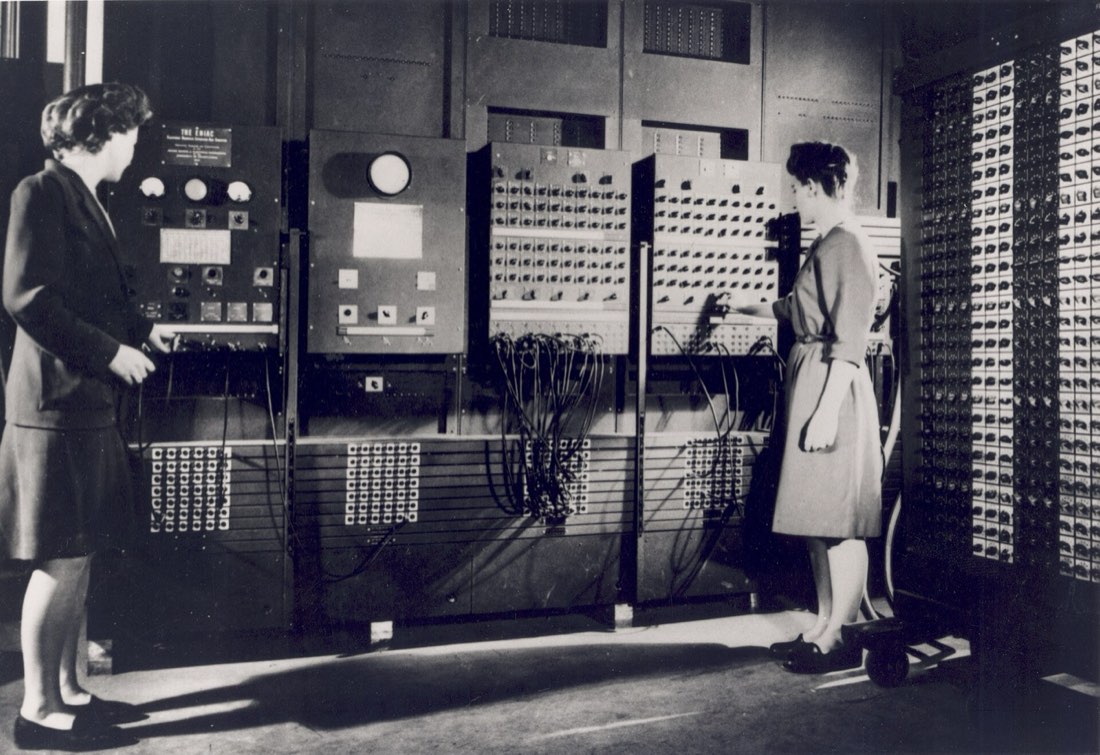
The first AI winter, 1974-1980
The promises do not come true. Problems turn out to need far more computing power and common-sense knowledge than anyone expected, and funding is cut.
- 1973The Lighthill Report, commissioned by the UK government, concludes that AI has failed to deliver on its grand promises. British AI funding is cut sharply.
- 1974DARPA in the US cuts back undirected AI research after disappointing results in speech understanding. The first "AI winter" sets in.
- 1970sStanford's MYCIN diagnoses blood infections and recommends antibiotics, performing as well as specialists in tests. It is never used clinically, but it shows the power of encoding expert knowledge as rules.
- 1979The Stanford Cart crosses a chair-filled room on its own, using cameras, taking around five hours. Robots
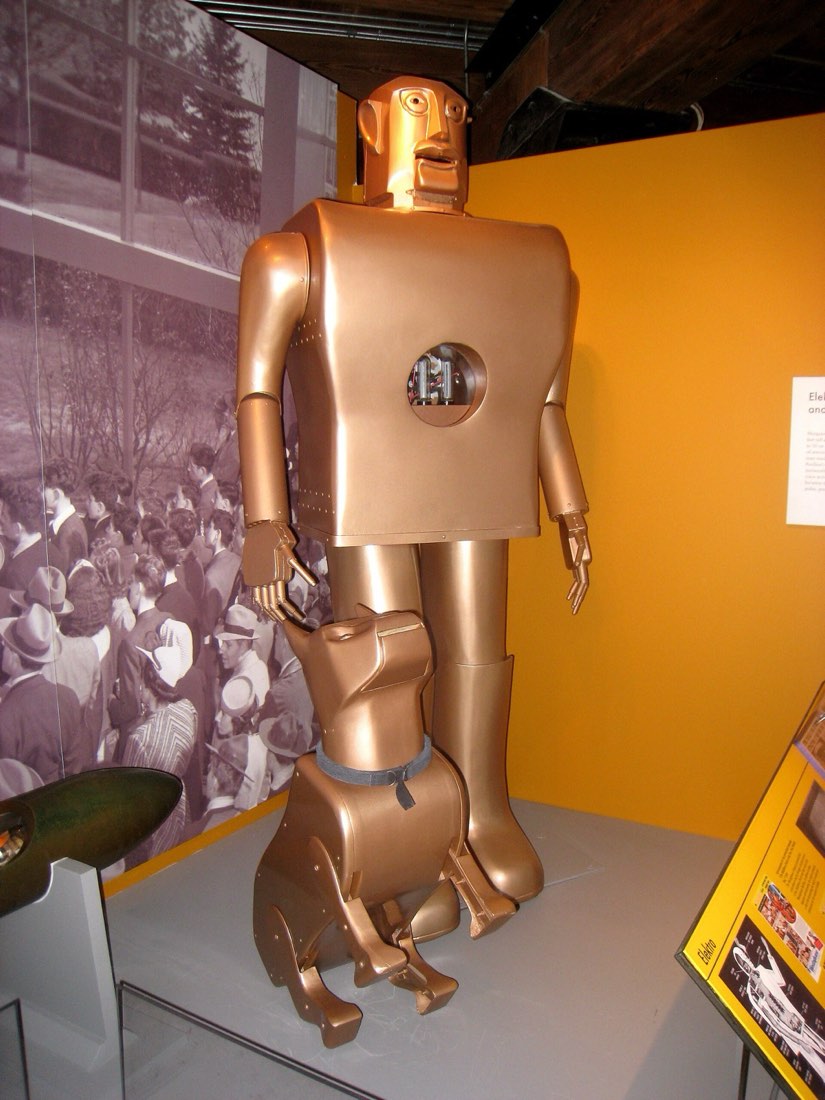
Expert systems and the second winter, 1980-1993
AI goes commercial through "expert systems" that capture human know-how as rules. A boom follows, then a bust. In the background, neural networks quietly return.
- 1980Digital Equipment Corporation starts using XCON to configure computer orders, reportedly saving it tens of millions of dollars a year. Companies rush to build expert systems.
- 1982Japan launches its Fifth Generation Computer project, an ambitious ten-year national effort at intelligent computers. The US and Europe respond with their own programmes.
- 1982John Hopfield describes a neural network that stores and recalls memories, helping revive interest in neural networks.
- 1984Douglas Lenat starts Cyc, an attempt to hand-code all of human common sense. It runs for decades.
- 1986David Rumelhart, Geoffrey Hinton and Ronald Williams popularise backpropagation, a way to train multi-layer neural networks. It remains the core of how networks learn today.
- 1986Ernst Dickmanns' team in Germany demonstrates a van that drives itself on empty roads. In 1995 one of his cars drives most of a 1,700 km trip from Munich to Copenhagen autonomously. Robots
- 1987The market for specialised LISP machines collapses as cheaper desktop computers catch up. Expert systems prove brittle and expensive to maintain. A second AI winter begins.
- 1989Yann LeCun at Bell Labs uses a convolutional neural network to read handwritten postcodes. Versions of it later read a large share of US bank cheques.
- 1990Rodney Brooks argues in "Elephants Don't Play Chess" that intelligence comes from bodies acting in the world, not from abstract reasoning. His insect-like robots influence a generation of roboticists. Robots
- 1992Gerald Tesauro's TD-Gammon teaches itself backgammon to near world-champion level by playing against itself.
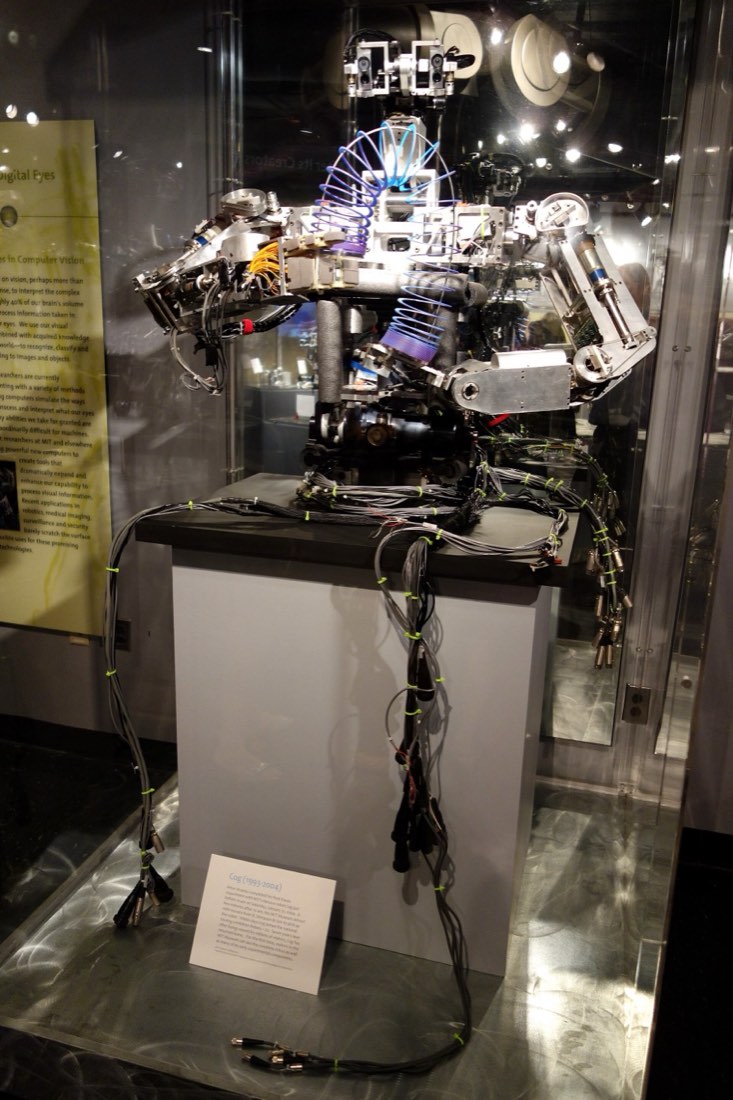
Machines that learn, 1993-2011
AI drops the grand claims and gets practical. Statistics and machine learning take over, the internet supplies data, and social robots appear in labs and living rooms.
- 1997IBM's Deep Blue beats world chess champion Garry Kasparov in a six-game match. It is a triumph of brute-force search rather than learning.
- 1997Sepp Hochreiter and Jürgen Schmidhuber publish the LSTM, a neural network that can remember over long sequences. It later powers speech recognition and translation.
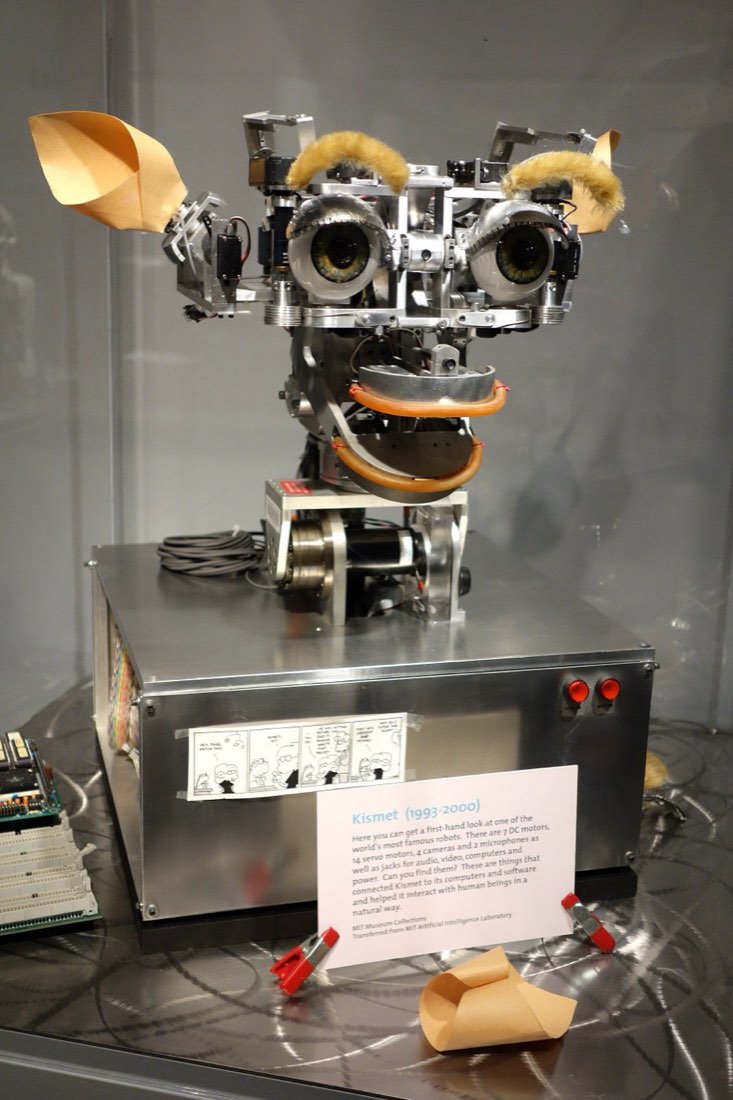
- Late 1990sCynthia Breazeal builds Kismet at MIT, a robot head that reads and expresses emotions in face-to-face interaction. It is widely regarded as the first social robot. Robots
- 1999Sony launches AIBO, a robot dog and the first mass-market entertainment robot. Owners form deep attachments to it. Robots
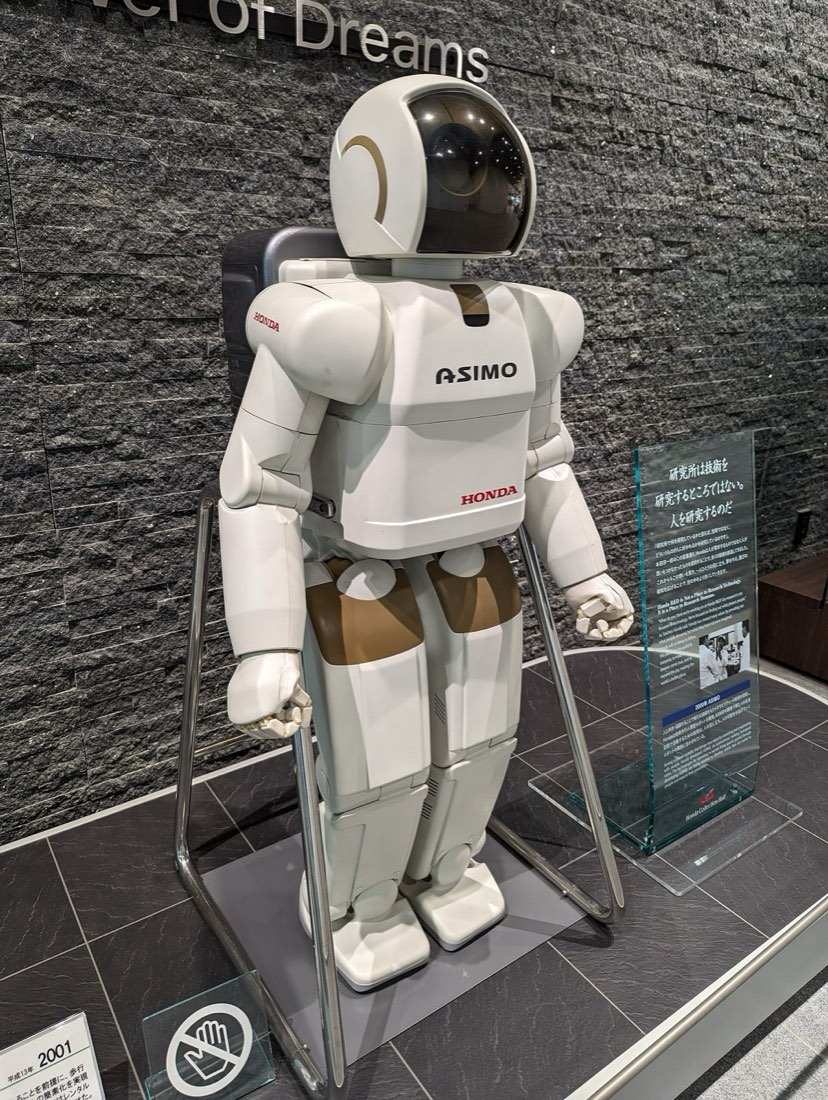
- 2000Honda unveils ASIMO, a humanoid that walks smoothly, climbs stairs and later recognises faces and gestures. Robots
- 2002iRobot's Roomba vacuum goes on sale, becoming the first robot found in millions of homes. Robots
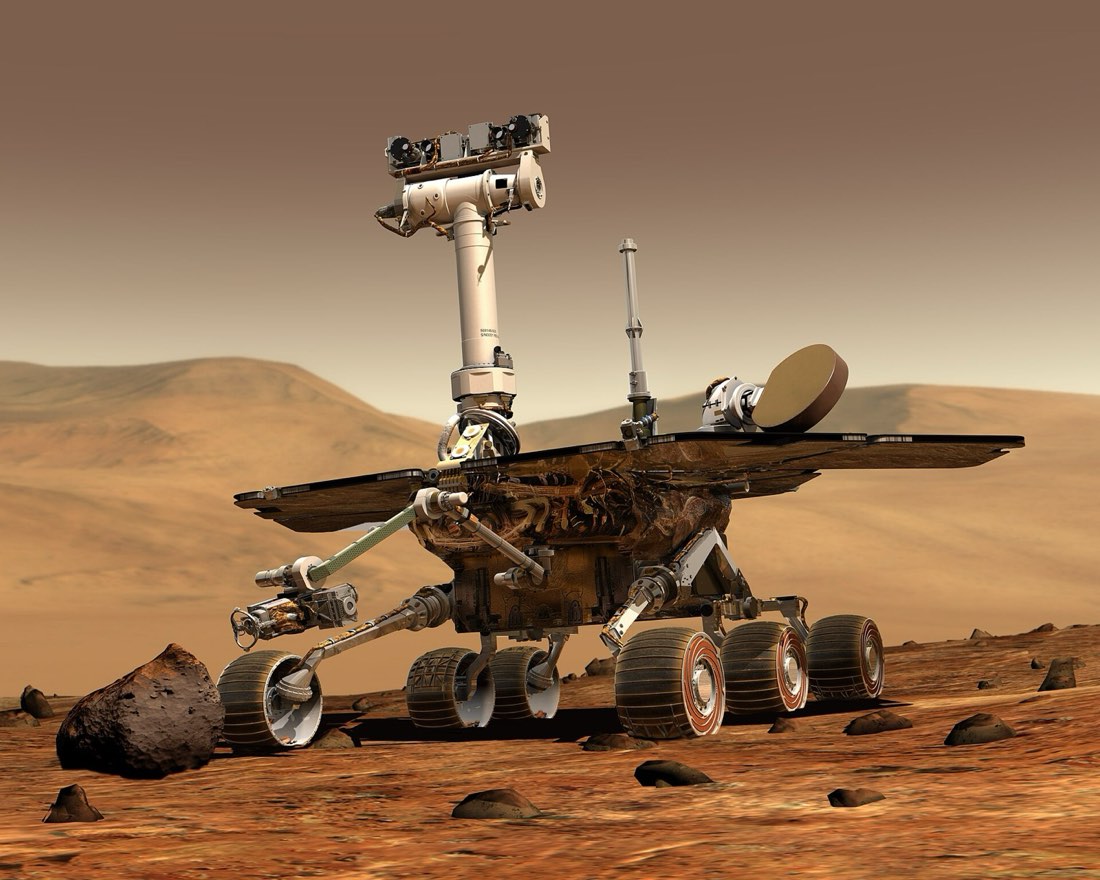
- 2004NASA's Spirit and Opportunity rovers land on Mars and begin driving with increasing autonomy. Robots
- 2005Stanford's car Stanley wins the DARPA Grand Challenge, driving 212 km across the Mojave Desert without a human. A year earlier, no car finished the course. Robots
- 2005David Feil-Seifer and Maja Matarić define "socially assistive robotics": robots that help people through social interaction rather than physical contact. Robots
- 2006Hinton and colleagues show how to train deep neural networks layer by layer, reviving the field under the name "deep learning". The first ACM/IEEE Human-Robot Interaction conference is held. Robots
- 2008Aldebaran's small humanoid NAO becomes a standard platform for robot football and research. Paro, a robotic seal, spreads through care homes. Robots
- 2009Fei-Fei Li's team presents ImageNet, a dataset of millions of labelled images. Its annual competition becomes the proving ground for computer vision.
- 2009The International Journal of Social Robotics launches and the first International Conference on Social Robotics is held. Robots
- 2011IBM's Watson beats the two greatest champions of the US quiz show Jeopardy!. Apple launches Siri on the iPhone 4S, putting a voice assistant in millions of pockets.
The deep learning revolution, 2012-2021
Neural networks trained on graphics chips start winning at everything: vision, speech, translation, games and science. Then a new architecture, the transformer, changes the direction of the field.
- 2012AlexNet, from Alex Krizhevsky, Ilya Sutskever and Geoffrey Hinton, wins the ImageNet competition by a wide margin using a deep network trained on GPUs. The deep learning boom starts here.
- 2013Google's word2vec learns word meanings as vectors, so that "king - man + woman" lands near "queen".
- 2014Ian Goodfellow introduces generative adversarial networks (GANs), which learn to create realistic images. Google buys DeepMind. Amazon launches the Echo and its assistant Alexa.
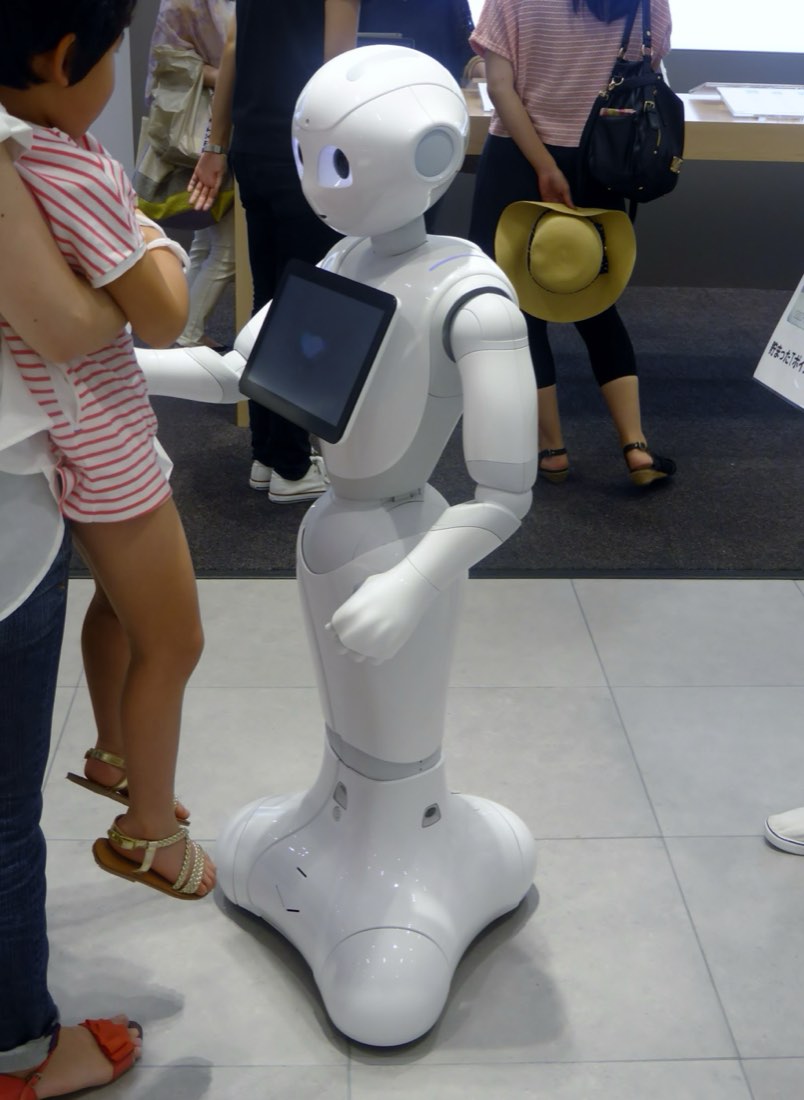
- 2014SoftBank and Aldebaran unveil Pepper, a humanoid designed to read emotions, later deployed in shops and banks worldwide. Jibo, a "family robot", raises millions through crowdfunding. Robots
- 2015OpenAI is founded as a non-profit research lab. Microsoft's ResNet makes very deep networks trainable and surpasses human-level accuracy on ImageNet's benchmark.
- 2016DeepMind's AlphaGo beats Go champion Lee Sedol 4-1. Its move 37 in game two, which no human would have played, becomes famous.
- 2016Microsoft's chatbot Tay is taken offline within a day after users teach it to post offensive messages, an early lesson in how AI systems learn from the people around them.
- 2017Google researchers publish "Attention Is All You Need", introducing the transformer. Almost every major language model since is built on it.
- 2017Hanson Robotics' humanoid Sophia is granted citizenship by Saudi Arabia, a publicity stunt that sparks debate about robot rights. Robots
- 2017DeepMind's AlphaZero teaches itself chess, shogi and Go from scratch in hours and beats the strongest existing programs.
- 2018OpenAI's first GPT and Google's BERT show that models pretrained on huge amounts of text can be adapted to almost any language task. Sony relaunches aibo. Robots
- 2019Hinton, LeCun and Yoshua Bengio receive the Turing Award for deep learning. OpenAI's GPT-2 writes text good enough that it is released in stages over misuse fears.
- 2020GPT-3, with 175 billion parameters, shows it can perform new tasks from a few examples in a prompt. DeepMind's AlphaFold 2 predicts protein structures with near-experimental accuracy, solving a 50-year-old problem in biology.
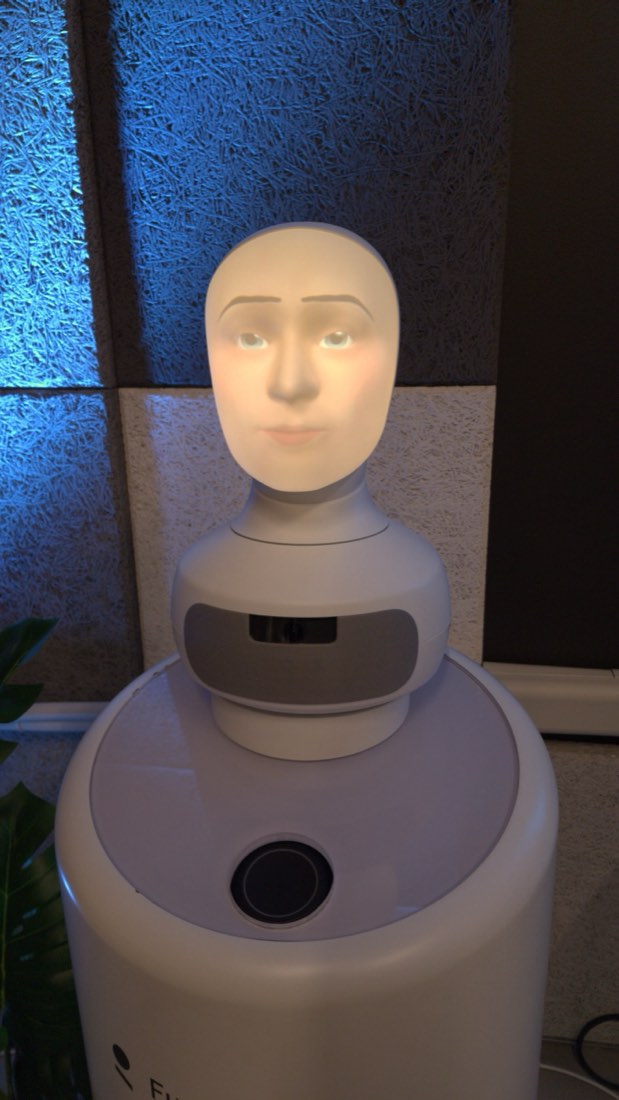
- 2021OpenAI's DALL-E creates images from text descriptions. GitHub Copilot starts writing code alongside programmers. Anthropic is founded. Engineered Arts unveils Ameca, a humanoid with strikingly realistic facial expressions. Robots
The generative AI era, 2022 onwards
AI leaves the lab and reaches hundreds of millions of people within months. Models learn to reason, write code and act as agents, while governments race to regulate them.
- 2022Midjourney and the open-source Stable Diffusion put high-quality image generation in anyone's hands, triggering fierce debates with artists over copyright.
- Nov 2022OpenAI releases ChatGPT. It is reported to reach 100 million users in about two months, then the fastest-growing consumer app ever.
- Mar 2023OpenAI releases GPT-4, which passes a simulated bar exam in the top 10% of test takers. Anthropic releases its first Claude model. An open letter calling for a six-month pause on giant AI experiments gathers thousands of signatures.
- May 2023Geoffrey Hinton leaves Google to speak freely about AI risks. Hundreds of AI researchers sign a one-sentence statement that mitigating the risk of extinction from AI should be a global priority.
- Nov 2023The UK hosts the first AI Safety Summit at Bletchley Park, and 28 countries plus the EU sign the Bletchley Declaration. Days later, OpenAI's board fires CEO Sam Altman, who returns within a week after staff threaten to quit.
- Dec 2023Google DeepMind launches Gemini, built to handle text, images, audio and video from the start.
- 2024Boston Dynamics retires its hydraulic Atlas and unveils an all-electric version. A wave of companies such as Figure, Tesla, Agility and Unitree race to build general-purpose humanoids. Robots
- May 2024OpenAI's GPT-4o holds spoken conversations in real time, with emotion in its voice, bringing the kind of interaction social robotics had long aimed for into a phone app.
- Aug 2024The EU AI Act enters into force, the world's first comprehensive AI law, with rules phased in over the following years.
- Sep 2024OpenAI's o1 introduces "reasoning" models that think step by step before answering, sharply improving at maths, science and code.
- Oct 2024AI wins two Nobel Prizes. Physics goes to John Hopfield and Geoffrey Hinton for foundations of machine learning with neural networks. Chemistry goes to David Baker for protein design and to Demis Hassabis and John Jumper for AlphaFold.
- Dec 2024Embodied, maker of the child companion robot Moxie, shuts down, leaving families with robots that would soon stop working. It renews questions about what owners of social robots are entitled to when a company fails. Robots
- Jan 2025China's DeepSeek releases R1, an open-weight reasoning model that rivals leading US models at a fraction of the reported training cost, briefly wiping hundreds of billions of dollars off Nvidia's market value. OpenAI, SoftBank, Oracle and MGX announce Stargate, a plan for up to $500 billion of AI infrastructure.
- Feb 2025The EU AI Act's first bans take effect, outlawing practices such as social scoring and manipulative AI. AI "agents" that browse the web and write and run code become mainstream products.
- Mar 2025Andrew Barto and Richard Sutton receive the Turing Award for founding reinforcement learning.
- Apr 2025Around 20 humanoid robots run alongside human runners in the world's first humanoid half marathon, in Beijing. The winning robot finishes in about 2 hours 40 minutes. Robots
- May 2025Google DeepMind's AlphaEvolve discovers a faster way to multiply 4x4 matrices, the first improvement on that case of Strassen's 1969 method in 56 years.
- Jul 2025Experimental models from Google DeepMind and OpenAI reach gold-medal standard at the International Mathematical Olympiad, solving five of six problems in natural language.
- Aug 2025OpenAI releases GPT-5. EU rules for general-purpose AI models start to apply. Beijing hosts the first World Humanoid Robot Games, with events from running to football. Robots
- Sep 2025An OpenAI system solves all 12 problems at the ICPC World Programming Finals. California passes SB 53, the first US state law aimed at catastrophic risks from frontier AI.
- Nov 2025The European Commission proposes delaying the AI Act's high-risk rules from August 2026 to December 2027, as part of a push to simplify EU digital regulation.
- Feb 2026The UN General Assembly appoints 40 experts to a new Independent International Scientific Panel on AI. India hosts the AI Impact Summit in New Delhi.
- Aug 2026Most of the EU AI Act applies, including transparency rules: people must be told when they are talking to an AI, and deepfakes must be labelled. For social robots and companion apps, disclosing that the user is talking to a machine is now a legal duty in the EU. Robots
The story is still being written. For what is happening in social robotics right now, see the daily news and research.
Patterns worth noticing
Hype and winter
AI has been oversold at least twice before, and each time funding collapsed. The pattern is the same: impressive demos, bold predictions, then problems that turn out to be far harder than they looked. Whether today's boom is different is the most-debated question in the field.
Learning beats hand-coding
The researcher Richard Sutton called it "the bitter lesson": methods that learn from data and scale with computing power have repeatedly beaten methods built on carefully hand-coded human knowledge, from chess to vision to language.
People treat machines as social
From the Mechanical Turk to ELIZA to today's chatbots, people readily attribute minds to machines that behave socially. That instinct is what makes social robots work, and it is also why they need to be designed honestly.
Bodies are harder than minds
Hans Moravec noted in the 1980s that what is hard for people, such as chess or calculus, is easy for computers, while what toddlers do effortlessly, like walking or picking up a cup, is very hard. Robots still lag far behind language models, which is why the current humanoid race is such an open question.