 Social Robotics
The science of human-robot interaction
Human-robot interaction, or HRI, is the research field behind social robotics. It asks how people perceive, respond to and live with robots, and how to design robots that work well with people.
Key ideas
Anthropomorphism
People attribute human traits, emotions and intentions to non-human things. Robots trigger this strongly, especially when they move on their own, have eyes, or respond contingently to what we do. Anthropomorphism is not a mistake people make out of ignorance: engineers who know exactly how a robot works do it too. It can be increased or decreased by design.
Computers as social actors
Experiments led by Clifford Nass and Byron Reeves in the 1990s showed that people apply social rules to computers automatically. Participants were more polite when rating a computer's performance on that same computer than on a different one, and responded to computer voices with gender stereotypes. This "media equation" is a foundation of HRI: social responses are triggered by cues, not by beliefs.
The uncanny valley
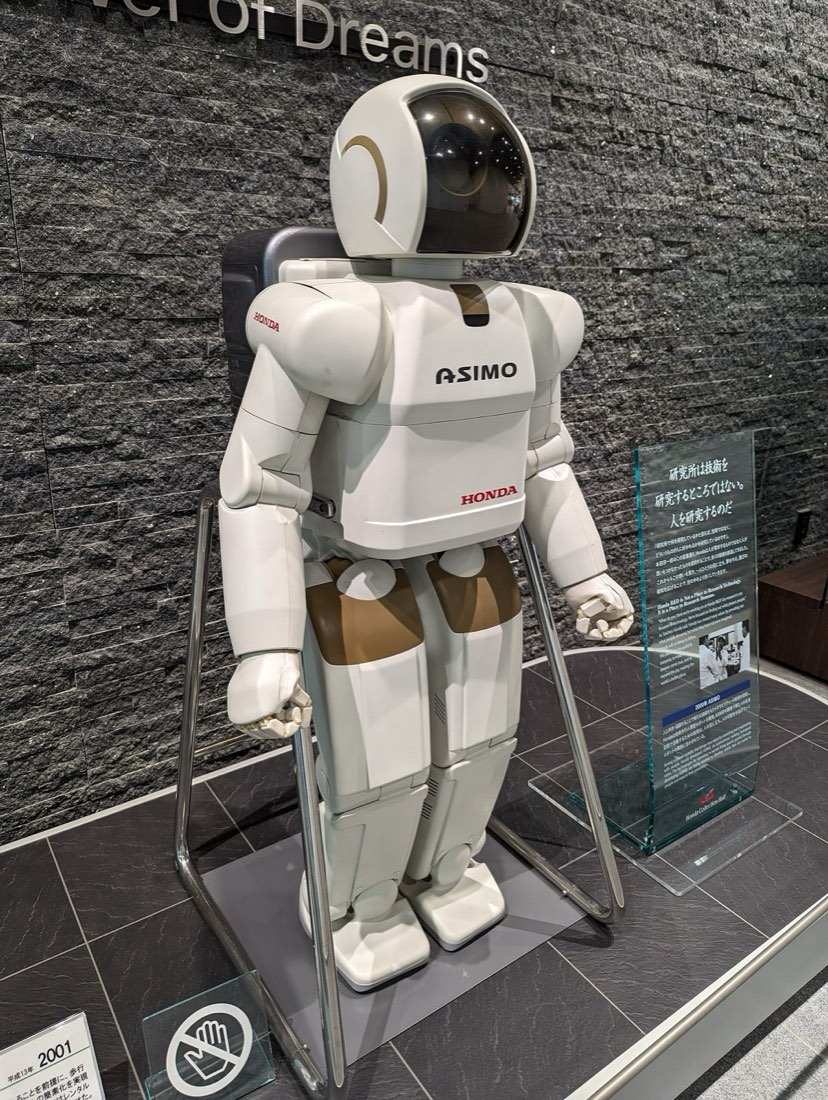
In 1970 the Japanese roboticist Masahiro Mori proposed that as a robot becomes more human-like, people's affinity for it rises, until it becomes almost but not quite human, at which point it suddenly feels eerie. Affinity recovers only when the robot becomes indistinguishable from a person. The idea is debated and hard to test precisely, but it strongly influences design: many successful social robots are deliberately stylised.
Embodiment and presence
Many studies have compared a physical robot with a video of the same robot or a virtual agent on a screen. Physically present robots are generally found to be more engaging, more persuasive and more enjoyable, and people follow their instructions more readily. Whether this justifies the cost of a physical robot depends on the task.
The novelty effect
People are fascinated by robots at first. Engagement in many studies drops sharply after the first sessions as the novelty wears off. This is why short studies can overstate a robot's benefits, and why long-term studies lasting weeks or months, in real homes, schools and care homes, are increasingly valued.
Trust and overtrust
For robots to be useful, people must trust them. But studies have found people trusting robots too much: following a robot's directions in a simulated emergency even after it had shown itself to be unreliable, for example. Researchers aim for "calibrated" trust that matches what the robot can actually do.
Proxemics
The anthropologist Edward T. Hall described how people use space: intimate, personal, social and public distances. Robots that approach too close, or from behind, make people uncomfortable. Research on robot proxemics informs how robots approach, follow and pass people.
Joint attention and gaze
Joint attention is two individuals attending to the same thing and knowing that they are. It is a foundation of human communication that develops in infancy. Robots that follow a person's gaze, and use their own gaze to direct attention, are easier to understand and collaborate with.
Theory of mind
Humans constantly model what others know, want and believe. A robot that can model what a person knows, for example realising that they did not see something happen, can communicate more helpfully. People also form a "theory of mind" about the robot, and mismatches between what people think the robot knows and what it actually knows cause many interaction failures.
Persuasion and social influence
Social robots can influence people: encouraging exercise, healthy eating or taking medication. Studies have also shown robots can sway people's decisions and even apply peer pressure, as children in some experiments changed correct answers to agree with a group of robots. This power is useful and needs careful handling.
How HRI research is done
- Lab experiments compare versions of a robot behaviour (for example, with and without gaze aversion) with controlled groups of participants.
- Field studies place robots in real settings such as schools, shopping centres and care homes, sometimes for months.
- Wizard of Oz studies use a hidden operator to control the robot, to test how people respond to abilities that are not yet automated.
- Questionnaires such as the Godspeed series (Bartneck and colleagues, 2009) measure how people perceive a robot's animacy, likeability and intelligence.
- Behavioural measures record what people actually do: how long they talk, where they look, how close they stand, whether they follow advice.
- Participatory design involves the intended users, such as older adults, carers, teachers or autistic people, in designing the robot from the start.
Like psychology, HRI has wrestled with small sample sizes and results that do not always replicate. The field increasingly values larger studies, pre-registration and sharing of data and code.
Where the field meets and publishes
ACM/IEEE HRI
The International Conference on Human-Robot Interaction, held annually since 2006. The field's most selective venue.
IEEE RO-MAN
The International Conference on Robot and Human Interactive Communication, held since 1992.
ICSR
The International Conference on Social Robotics, held since 2009.
International Journal of Social Robotics
Published by Springer since 2009.
ACM Transactions on Human-Robot Interaction
The main dedicated HRI journal, formerly the Journal of Human-Robot Interaction.
Robophilosophy
A conference series on the philosophy and ethics of social robots, started in 2014.
Much new research also appears first as preprints on arXiv, mainly in the robotics (cs.RO) and human-computer interaction (cs.HC) categories. Our news page collects the latest social robotics papers every day.
Some influential research groups
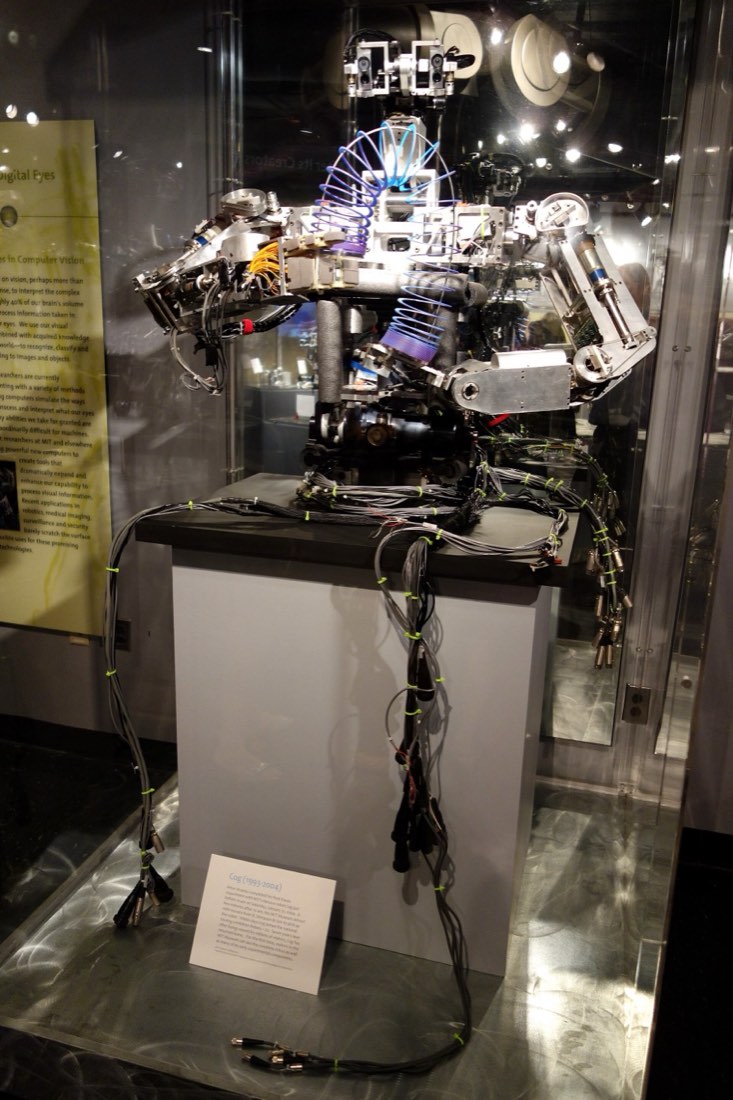
Social robotics research happens in hundreds of universities. A few groups have been especially influential:
- MIT Media Lab's Personal Robots Group, founded by Cynthia Breazeal, creator of Kismet and Jibo.
- The Interaction Lab at the University of Southern California, led by Maja Matarić, which helped define socially assistive robotics.
- Hiroshi Ishiguro's laboratories at Osaka University and ATR in Japan, known for androids.
- The Yale Social Robotics Lab, led by Brian Scassellati, known for work on autism and robots.
- KTH Royal Institute of Technology in Stockholm, whose speech and conversation research led to Furhat.
- The Social Robotics Lab at Uppsala University, working on affective and socially aware robots.
- CITEC at Bielefeld University in Germany, a long-standing centre for interactive robotics.
Big open questions
- How can robots stay engaging and useful over months and years, not just days?
- How should robots behave in groups and in public, where many people with different needs are present?
- How should language models be combined with robot bodies so that what the robot says matches what it can see and do?
- What really changes for people when the conversational partner has a body?
- How do responses to robots differ across cultures, ages and abilities?