Twenty robots that shaped social robotics, in roughly the order they appeared. Some were commercial hits, some were research milestones, and some are best remembered for what their failure taught everyone else.
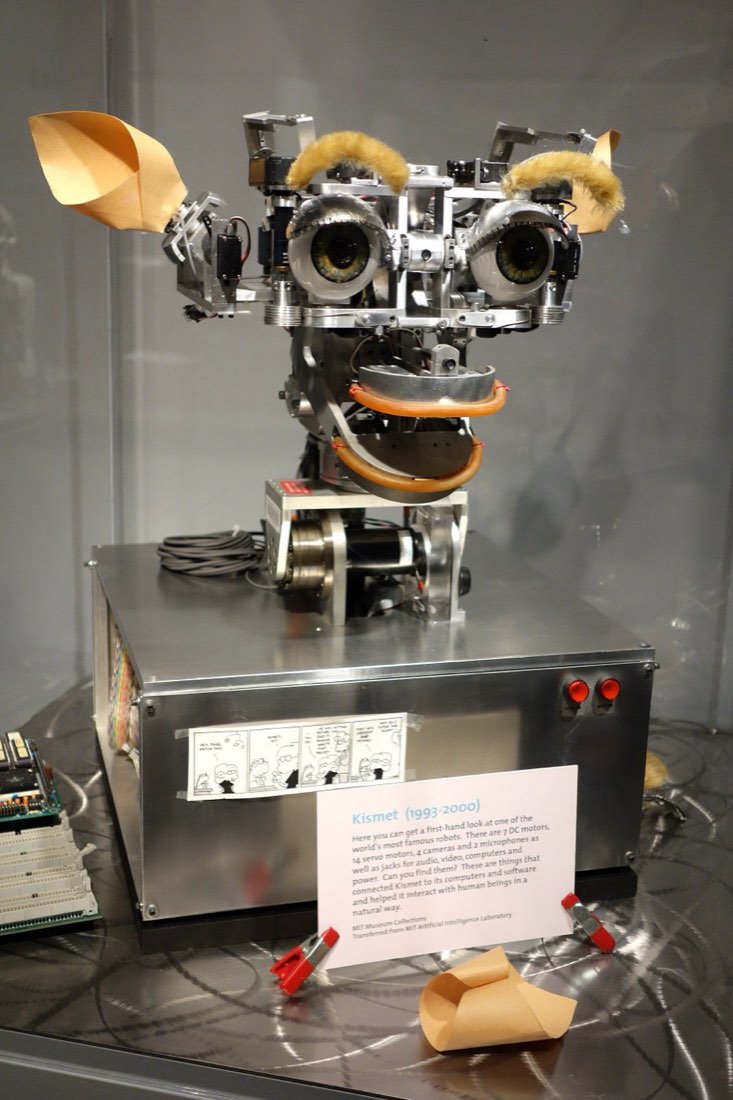
Fig. 01Kismet at the MIT Museum.
Late 1990s · MIT, USA
Kismet
A mechanical head with large eyes, eyebrows, ears and lips, built by Cynthia Breazeal in Rodney Brooks's lab. Kismet could read tone of voice and respond with expressions, and engaged people in infant-like exchanges. Widely regarded as the first robot designed for face-to-face social interaction.
Showed that expressive faces and timing matter more than intelligence for engaging people.
1999 · Sony, Japan
AIBO / aibo
A robot dog that learned tricks, responded to its owner and developed a "personality" over time. It was the first mass-market entertainment robot. Sony discontinued it in 2006 and relaunched a new aibo in 2018. When support for old units ended, some owners in Japan held funeral ceremonies for their robot dogs.
Proved people form lasting emotional bonds with robots, and that ending support is felt as a loss.
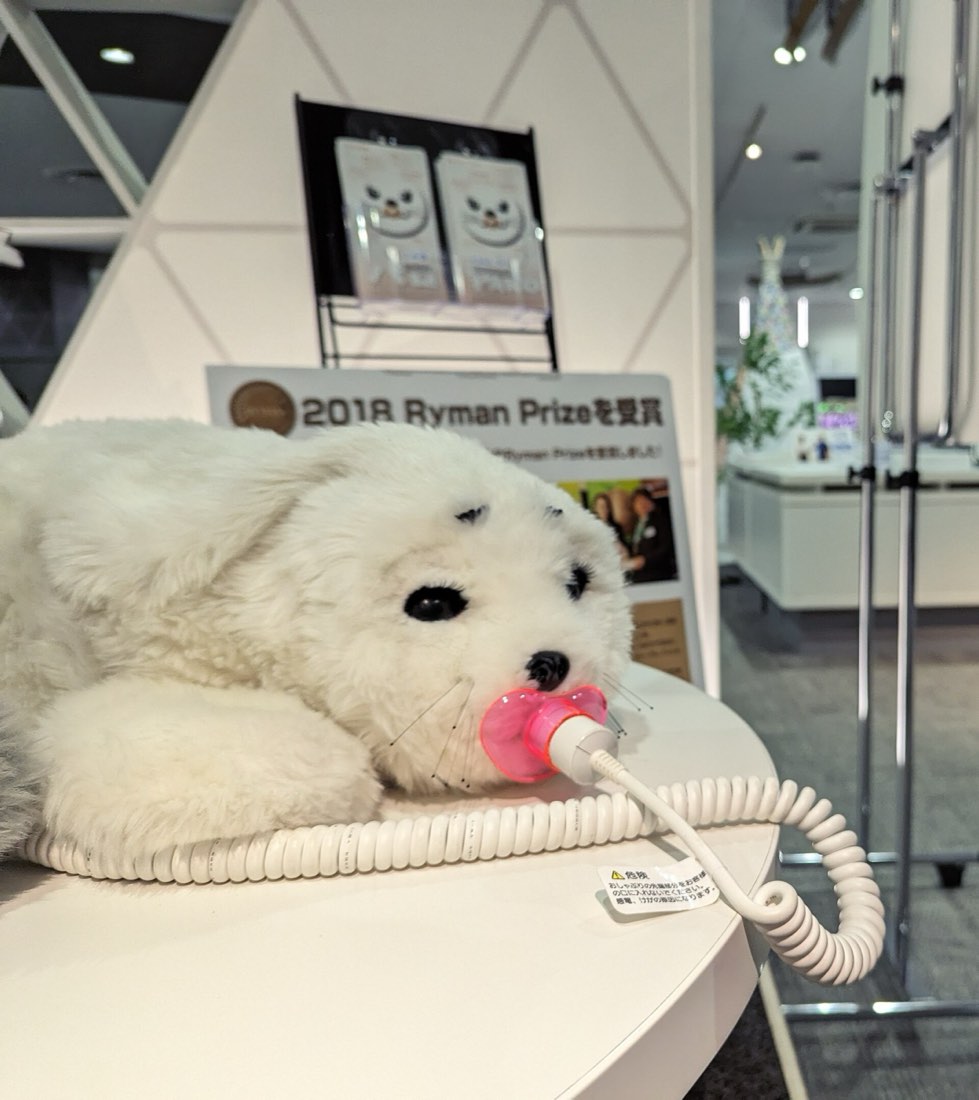
Fig. 02PARO, the robotic seal used in dementia care.
2000s · AIST, Japan
Paro
A soft robotic baby harp seal created by Takanori Shibata. It responds to touch, light and voice, moves its head and flippers and makes seal sounds. Used in dementia care in many countries, Paro is the most studied therapeutic robot.
A robot does not need to talk to be helpful; choosing an unfamiliar animal avoided disappointed expectations.
2003 · Japan
Keepon
A small yellow robot made of two soft spheres, created by Hideki Kozima for research with autistic children. It can only nod, turn and bob, yet children engaged with it readily. A video of it dancing became an early internet hit.
Minimal designs can be powerful, and simplicity can make a robot less intimidating.
2004 · IIT, Italy
iCub
A child-sized open-source humanoid built by a European consortium led by the Italian Institute of Technology. Dozens of copies are used in labs to study how robots could learn and develop as children do.
Open platforms let many labs build on each other's work.
2005 · University of Hertfordshire, UK
Kaspar
A child-sized humanoid with a deliberately simplified face, designed for therapy with autistic children. Its predictable expressions help children practise imitation, turn-taking and touch.
Less realism can be better for some users.
2006 · ATR / Osaka University, Japan
Geminoid
An android built by Hiroshi Ishiguro as a near-exact copy of himself, operated remotely. Geminoid and its successors are used to study presence, identity and how human a robot has to look before people treat it as a person.
Explored the uncanny valley from the inside, and raised questions about identity.
2008 · Aldebaran, France
NAO
A 58 cm humanoid that walks, talks, recognises faces and dances. It became the standard platform for the RoboCup robot football league and one of the most widely used robots in HRI research and education.
An affordable standard platform made social robotics research possible in many more labs.
2013 · NTU, Singapore
Nadine
A realistic android receptionist modelled on its creator, Nadia Magnenat Thalmann. Nadine remembers people and past conversations and has been tested in an insurance office and a care home.
Memory of past interactions is central to feeling known.
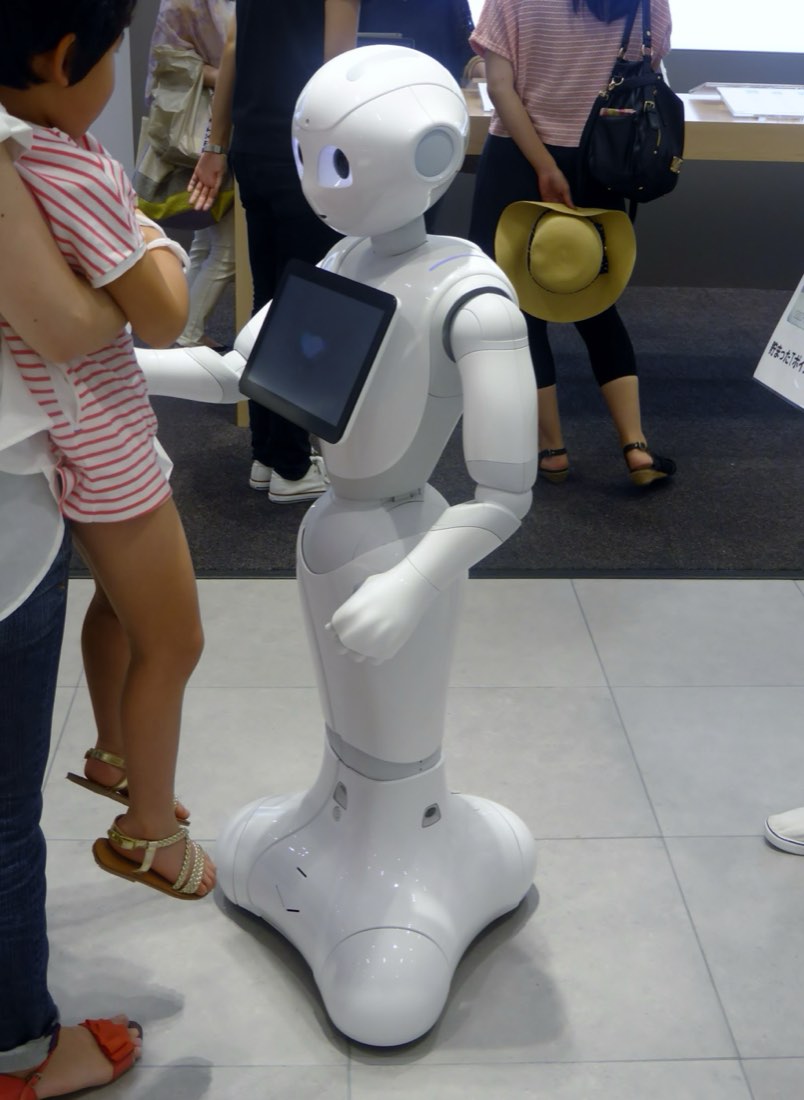
Fig. 03Pepper, SoftBank's humanoid robot.
2014 · SoftBank and Aldebaran
Pepper
A 1.2 m humanoid on wheels with a tablet on its chest, marketed as able to read emotions. Pepper was deployed in shops, banks, airports and homes, especially in Japan. Production was paused in 2021.
Showed huge public interest, and how hard noisy, real-world environments are.
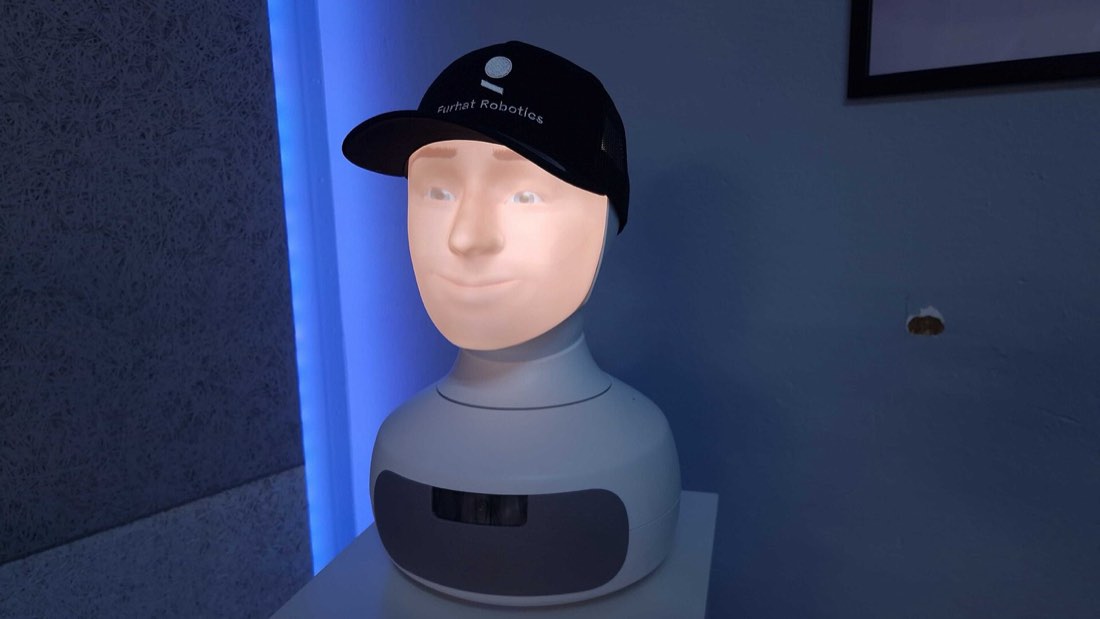
Fig. 04Furhat, with its back-projected animated face.
2014 · Furhat Robotics, Sweden
Furhat
A spin-off from KTH Royal Institute of Technology in Stockholm. Furhat projects an animated face from inside onto a translucent mask, so the same robot can take on different faces, ages and characters, and focuses on natural spoken conversation, gaze and multi-party interaction. Used in research, education, healthcare and recruitment.
The face and conversation are the heart of social interaction; a body is optional.
2014-2017 · Jibo Inc., USA
Jibo
A "family robot" with a round screen face on a swivelling body, created by Cynthia Breazeal. It raised millions in crowdfunding and appeared on the cover of TIME's best inventions list, but the company struggled after launch, and owners were left with robots that lost their online features.
Charm is not enough; a home robot must do something a smart speaker cannot.
2016 · Anki, USA
Cozmo and Vector
Small, bulldozer-like robots with expressive screen eyes, animated with help from people with film animation backgrounds. Cozmo played games and showed emotions; Vector (2018) added voice. Anki closed in 2019 and the products were later taken over by another company.
Character animation can make a tiny robot feel alive.
2016 · Hanson Robotics, Hong Kong
Sophia
A realistic android head and torso, famous for media appearances and for being granted Saudi Arabian citizenship in 2017. Researchers criticised the attention as overstating what the robot could do.
Spectacle drives publicity but can mislead the public about AI.
2017 · Mayfield Robotics, USA
Kuri
A small home robot with expressive eyes and a built-in camera, backed by Bosch. It was cancelled in 2018 before wide release.
Another sign of how hard the consumer home market is.
2019 · Groove X, Japan
LOVOT
A round, warm, furry robot on wheels designed purely to be loved. It has no practical function: it seeks attention, wants to be held and gets warmer when cuddled.
Being lovable can be a purpose in itself.
2020 · Embodied, USA
Moxie
A companion robot for children aged about 5 to 10, designed to support social and emotional learning through conversation and play. Embodied shut down in December 2024, and because Moxie relied on cloud services, the robots soon stopped working.
Cloud-dependent robots can die with their company; owners need a plan for that.
2021 · Engineered Arts, UK
Ameca
A humanoid with a strikingly expressive grey face and hands, designed as a platform for human-robot interaction. Videos of its facial expressions went viral, and it is often connected to large language models for conversation.
Very realistic expression is now possible; the question is when it helps.
2021 · Amazon, USA
Astro
A home robot on wheels with a screen face and a periscope camera, combining Alexa with home monitoring. It brought a major tech company into the home robot market.
Big companies see a future in home robots, but privacy concerns are intense.
2022 · Intuition Robotics, Israel/USA
ElliQ
A tabletop companion for older adults, shaped like an abstract lamp with a separate screen. It starts conversations proactively, suggests activities, reminds users of health tasks and connects them with family. Some US state programmes have provided it to older residents.
A robot that initiates, rather than waiting to be asked, can change how often people engage.
Many other robots deserve a place here, including Leonardo, Buddy, QTrobot, Misty and the new generation of humanoids. For more, follow the daily news.
 Social Robotics